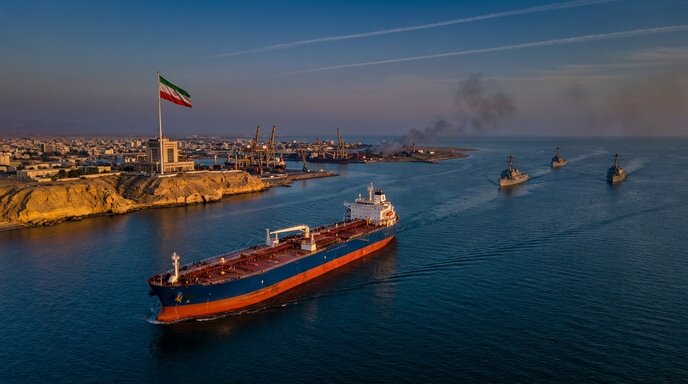
US strikes on Iran made headlines as U.S. forces carried out limited self-defense strikes in southern Iran. The action, confirmed by U.S. Central Command (CENTCOM), targeted Iranian missile launch sites and boats attempting to emplace mines near the Strait of Hormuz. Occurring just as peace negotiations appear to be advancing, the episode highlights the fragile balance between military restraint and diplomatic progress in the ongoing 2026 U.S.-Iran conflict.
What happened?
Early on May 26, 2026 (local time in Iran), U.S. forces conducted targeted strikes in southern Iran, specifically around the port city of Bandar Abbas. According to CENTCOM, the strikes hit missile launch sites and Iranian boats that were attempting to lay mines in the strategically vital Strait of Hormuz. CBC News
Explosions were reported in the area, and Iran’s Islamic Revolutionary Guard Corps (IRGC) stated that air defenses had been activated. No large-scale escalation followed the incident, and both sides continue to describe the broader ceasefire—agreed in April 2026—as still in effect.
Why the U.S. says it acted
The Pentagon and CENTCOM described the operation explicitly as self-defense. In an official statement, CENTCOM spokesman Capt. Tim Hawkins said: “U.S. forces conducted self-defense strikes in southern Iran today to protect our troops from threats posed by Iranian forces. Targets included missile launch sites and Iranian boats attempting to emplace mines. U.S. Central Command continues to defend our forces while using restraint during the ongoing ceasefire.”
President Donald Trump, while noting that negotiations with Iran are “proceeding nicely,” has repeatedly warned that any deal must be comprehensive or the U.S. will return to stronger military action. Secretary of State Marco Rubio emphasized that the Strait of Hormuz “has to be open, one way or another.” WSJ
Iran’s response
Iranian officials and state-linked media have not issued a detailed official rebuttal to the latest strikes as of the most recent reporting. Local reports mentioned explosions near Bandar Abbas and IRGC air-defense activation, with some accounts noting IRGC casualties (exact numbers remain unverified by independent sources). Earlier statements from Iranian diplomats indicated that while progress has been made in talks, a final agreement is “not imminent.” CNN
Iran has previously framed similar U.S. actions as ceasefire violations but has so far avoided immediate large-scale retaliation.
Key events so far
Here is a concise timeline of the latest phase of the conflict:
- February 28, 2026: U.S. and Israeli strikes begin against Iranian military and nuclear-related sites.
- April 8, 2026: Ceasefire takes effect after weeks of fighting.
- Early May 2026: Clashes erupt in the Strait of Hormuz; Iran attempts to restrict shipping, and the U.S. enforces a naval blockade of Iranian ports.
- May 25–26, 2026: U.S. sinks Iranian vessels attempting to lay mines and strikes missile sites near Bandar Abbas in self-defense actions.
- Ongoing: Mediated talks (including sessions in Qatar) focus on reopening the Strait of Hormuz, nuclear safeguards, sanctions relief, and regional security.
Also Read: Iran’s Supreme Leader Hidden in Secret Location as Courier Network Slows U.S. Deal Talks
Why this matters globally
The US strikes on Iran occur against the backdrop of a conflict that has already disrupted regional stability and global energy flows. The Strait of Hormuz carries roughly one-fifth of the world’s oil and liquefied natural gas. Any sustained disruption affects economies from Asia to Europe and the United States.
The strikes also illustrate the tension between military posturing and diplomacy: the U.S. is simultaneously enforcing red lines and pursuing a negotiated end to hostilities.
Oil prices and market reaction
Markets reacted with mixed signals on May 26. U.S. West Texas Intermediate (WTI) crude fell about 5% to around $91–92 per barrel, while international Brent crude rose modestly (up roughly 1.7–2%). Analysts attributed the volatility to competing forces: optimism about a potential deal versus immediate concerns over fresh military activity. CNBC
What could happen next
Negotiations remain active, with U.S. officials describing a draft framework that could include Iranian commitments on its nuclear program and the reopening of the Strait of Hormuz. Trump has linked broader regional peace efforts, including expansion of the Abraham Accords, to any final Iran agreement.
Watch for:
- Official Iranian statements or potential limited retaliation.
- Updates from ongoing talks in Qatar or other venues.
- Further oil market movements and statements from Gulf allies.
- Travel and security advisories for the region.
What readers should watch next: Monitor official CENTCOM and White House releases, as well as credible reporting from Reuters, AP, or the BBC for any escalation or breakthrough in talks. Developments can move quickly in this fluid situation.
Conclusion
The latest US strikes on Iran represent a measured, defensive response rather than a return to full-scale conflict. They underscore the delicate interplay of military deterrence and diplomatic engagement as both Washington and Tehran navigate a path toward a more permanent agreement. While the ceasefire holds for now, sustained progress in negotiations will be essential to prevent further incidents and stabilize energy markets and regional security.
Readers seeking deeper context on the broader 2026 conflict or oil market dynamics can explore related coverage on this blog.